





Cristiane Miranda
Co-Fundadora do projeto Agarrados à Net, PortugalDepois de 20 anos no mundo empresarial, em 2016 enveredou por áreas distintas, que lhe trouxeram uma visão do trabalho direto com as pessoas, o que a levou a encontrar o seu propósito de vida e fazer o que a preenche: ajudar os outros, através do coaching, tendo criado um programa específico, o Teen On Top - Coaching para Jovens, onde ajuda jovens a atingir o seu verdadeiro potencial, dando apoio aos pais na sua tarefa de educar os seus filhos. De referir que tem mais de 20 anos de experiência de voluntariado com crianças e jovens. Criou ainda o Teen On Top - School Edition um programa para escolas, onde ajuda os alunos a definirem os seus objetivos e através do qual trabalha também a sua autoestima e autoconfiança. Em 2021, juntamente com Tito de Morais, criou o projeto “Agarrados à Net – Como Gerir o Tempo Online dos Teus Filhos”, que tem como missão ajudar os pais e educadores a gerirem melhor o tempo que os seus filhos passam atrás de um ecrã, assim como os próprios miúdos a gerirem melhor o seu tempo online, de uma forma prática, simples e descontraída. Entre outros programas, desenvolveram o “217 Challenge - 7 Passos para a Parentalidade Digital Positiva”, o “Que Tipo de Pais Digitais Somos” e o “Faz-te Ouvir! Dá a Volta ao [Cyber]Bullying”. Foi, ainda, co-organizadora e co-anfitriã da IV Global StopCyberbullying Telesummit (2022). Estruturaram e ministraram para a Plátano Editora os cursos de formação de professores "Educação para a Cidadania e Bem-Estar Digital" e "Bullying & Cyberbullying - Como Identificar, Prevenir, Intervir e Combater", promovidos pela Direção Regional de Educação e Secretaria Regional de Educação, Ciência e Tecnologia da Região Autónoma da Madeira (2022). Foram ainda os criadores da Semana do Bem-Estar Digital e organizadores da I Conferência Internacional de Promoção do Bem-Estar Digital (2023).


Sónia Seixas
Psicóloga, Docente no Ensino Superior, PortugalNascida em Lisboa, Portugal, em 1970, tem uma Licenciatura em Antropologia Social pelo ISCTE e uma Licenciatura em Psicologia Educacional pelo ISPA. Tem um Doutoramento em Psicologia Pedagógica, pela Universidade de Coimbra, com uma tese sobre saúde e comportamentos de bullying. É professora do Ensino Superior desde 1998, lecionando sobretudo em cursos de educação formal e não formal, conteúdos de psicologia do desenvolvimento e da aprendizagem. É presentemente Vice-presidente do Instituto Politécnico de Santarém. É investigadora, formadora e autora de livros e de artigos no âmbito do bullying e do cyberbullying, nomeadamente co-autora dos livros "Plano Bullying - Como Apagar o Bullying da Escola", "Diz não ao Bullying - Não deixes que te façam mal!" e "Cyberbullying - Um Guia Para Pais e Educadores".


Tito de Morais
Fundador do Projecto MiudosSegurosNa.Net, PortugalAlém de fundar o Projecto MiudosSegurosNa.Net em 2003, foi avaliador externo do projeto “Cyber Training – Taking Action Against Cyberbullying”, uma iniciativa financiada pela Comissão Europeia que produziu um manual de formação para formadores no domínio do cyberbullying. É coautor do livro "Cyberbullying - Um Guia Para Pais e Educadores" (Portugal, 2016) e de um capítulo do livro "Bullying: Perspectives, Practices and Insights" publicado pelo Conselho da Europa em 2017. Foi formador no Curso Avançado em Cyberbullying [E.learning] (1ª edição - 2017; 2ª edição - 2018; 3ª edição - 2019; 4ª edição - 2020) promovido pelo Instituto CRIAP (Portugal). É coorganizador e coanfitrião das Cyberbullying Talks (2019, 2020 e 2021) e coorganizador e coanfitrião da Global StopCyberbullying Telesummit (2019 a 2022), com oradores de vários países, representando todos os Continentes. Foi também especialista no MOOC (Massive Online Open Course) 'Bullying & Ciberbullying: Prevenir e Agir' (1ª edição - 2019; 2ª edição - 2020; 3ª edição - 2022) promovido pela Direção Geral de Educação (DGE) no âmbito do Centro de Sensibilização SeguraNet e da equipa de Educação para a Saúde, e consultor do grupo de trabalho da DGE para o plano "Escola Sem Bullying. Escola Sem Violência" (2019). Juntamente com Cristiane Miranda é co-fundador do projeto Agarrados à Net e co-criador do programa “Faz-te Ouvir! Dá a Volta ao [Cyber]Bullying!”. Estruturaram e ministraram para a Plátano Editora os cursos de formação de professores "Educação para a Cidadania e Bem-Estar Digital" e "Bullying & Cyberbullying - Como Identificar, Prevenir, Intervir e Combater", promovidos pela Direção Regional de Educação e Secretaria Regional de Educação, Ciência e Tecnologia da Região Autónoma da Madeira (2022). Foram ainda os criadores da Semana do Bem-Estar Digital e organizadores da I Conferência Internacional de Promoção do Bem-Estar Digital (2023).
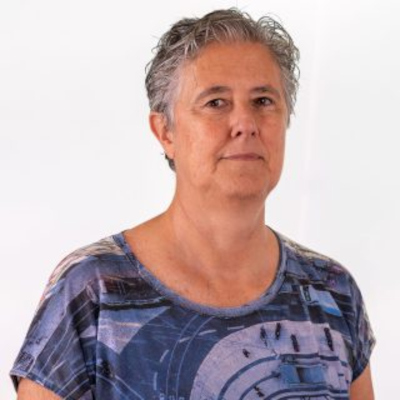
Eduarda Ferreira
Researcher, EU Kids Online (Portugal)Eduarda Ferreira is a researcher at CICS.NOVA – the Interdisciplinary Centre for Social Sciences at NOVA University Lisbon – and the national focal point for internet and screen issues at the Institute for Addictive Behaviors and Dependencies (ICAD). She holds a PhD in Human Geography, with training in Psychology and e-Learning Systems Management. Her research focuses on the relationships between children, young people, and digital technologies, with particular attention to the gender dimensions of digital experiences. She has participated in national and international projects, including Net Children Go Mobile and EU Kids Online. She is co-coordinator of CriA.On – Children and Adolescents Online, a NOVA FCSH platform dedicated to the production and dissemination of knowledge about the digital lives of children and adolescents, promoting an evidence-based approach to support families, professionals, educators, and decision-makers.
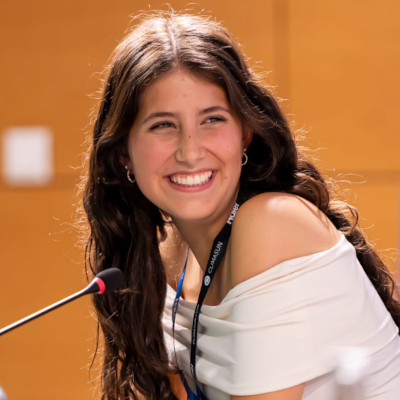
Inês Canto
Microsoft AI Future Youth Council (Portugal)My name is Inês Canto, I am a 10th-grade student in languages and humanities, and I began my journey in projects related to digital well-being and internet safety in the 8th grade, when I took on the role of digital leader at my school. In that context, I started by promoting sessions aimed at 5th and 6th-grade students, promoting good practices for internet use. Subsequently, I was invited by the Department of Education to moderate several initiatives, including seminars on online well-being and national meetings dedicated to digital citizenship. At the beginning of last year, I accepted the challenge of joining the Better Internet for Kids project, a European initiative focused on promoting a safer digital environment for children and young people. As part of this project, I had the opportunity to participate as a speaker at the Safer Internet Forum (SIF) 2025, held at the Calouste Gulbenkian Foundation. This was followed by preparation for the international forum in Brussels, where I was present in December of the same year. Following that experience, I was invited to take on the role of ambassador for Better Internet for Kids. More recently, the opportunity arose to apply to the Microsoft AI Future Youth Council, a project in which I am currently involved, contributing to the reflection and development of initiatives related to the future of artificial intelligence and young people.

João Tavares Lopes
BIK Youth Ambassador/Digital Leader (Portugal)João Tavares Lopes is 18 years old, was born in Lisbon, and is currently a first-year student of Aerospace Engineering at Instituto Superior Técnico in Lisbon. He has been a Digital Leader for 7 years and an Ambassador for the Better Internet for Kids Youth (BIK Youth) program for 3 years, during which time he has developed numerous activities related to digital security, artificial intelligence, children’s online rights, evolution and innovation in education, financial markets and the presence of young people in them, among many other topics. He has participated in several conferences, summits and meetings in this same field, having been part of working groups for discussion and evaluation of measures related to the Digital Services Act (DSA). He works in partnership with the European Commission and the European Schoolnet on several projects, and is also a guest speaker at international conferences where he addresses topics such as digital security, AI, conscious education for the future, among others. He is the co-coordinator of a volunteer project in Portugal, a mathematics tutor, and has developed several projects in the field of engineering, skills that he also intends to promote in the student community. He is a strong advocate for empowering young people for the job market from an early age and for their safe contact with new technologies.

José Pedro Caçador
Digital Leader, Ílhavo School Group (Portugal)José Pedro Caçador is 15 years old and in the 9th grade at the Ílhavo School District, where he has been awarded prizes for academic and social merit. In the school environment, he has been involved in several highly relevant projects, such as ‘Eco-Schools’, ‘Anti-Bullying’ and ‘Youth Parliament’. In August 2024, he participated in the “Climantica” International Campus, integrating the “EducoHealth” documentary project. From an early age, José Pedro has shown great interest in politics, having presented a budget amendment proposal for the co-participation of a medicine. He is a member of the Ílhavo Youth Municipal Assembly, the school newspaper “ECOS” and the Student Association of his school. He has also been a Digital Leader since the beginning of the last school year. Outside of student life, he is a football referee in the Aveiro Football Association.

Marta Gonçalves
Digital Leader and Ambassador of the Better Internet for Kids Program (Portugal)Marta Gonçalves is a European Youth Ambassador for the European Commission’s Better Internet for Kids program. Her journey in defending children’s rights online began with her participation in the Portuguese initiative Líderes Digitais (Digital Leaders), promoted by the SeguraNet Awareness Center. Since then, she has collaborated with the Portuguese Ministry of Education, participating in various conferences and lectures where she shares her perspective on the challenges young people face in the digital environment, also collaborating with other national and international entities. Since joining the BIK youth panel, she has contributed as a consultant in several online sessions on various regulations, such as the European Union’s Digital Services Regulation. She has also been a speaker at several European events, such as the Safer Internet Forum 2024 and 2025, the 15th European Forum on Children’s Rights and, more recently, is part of the “Expert Panel on Children’s Online Safety and Possible Age Restrictions on Social Networks”, under the guidance of the European Commission.

Paulo Moreira
Founder, Treino Inteligência Emocional ® (Portugal)Paulo Moreira is the author of the best-selling book "EMOTIONAL INTELLIGENCE – a practical approach" and founder of the brands Treino Inteligência Emocional®, focused on training in the area of Emotional Intelligence, and Emoty Games®, dedicated to creating games, books, and materials focused on emotional intelligence, aimed at children and families. He is a Visiting Professor at the Catholic University of Portugal, a Researcher at the Católica Research Centre, and the host of the podcast "Emotional Intelligence: the Podcast".


Laura Lundy
Professora de Direitos da Criança, University College (Irlanda)Laura Lundy é Professora de Direito na University College Cork e Doutora Honorária em Direito da Educação e Direitos da Criança na Queen’s University, em Belfast, onde fundou o Centro para os Direitos da Criança. É coeditora-chefe do International Journal of Children’s Rights. A sua especialidade é o direito e os direitos humanos, com especial enfoque no direito da criança a participar na tomada de decisões e no direito à educação. O seu artigo de 2007 no British Educational Research Journal, "'Voice' is not enough" ('Voz' não é suficiente), é um dos trabalhos académicos mais citados sobre os direitos da criança de sempre. O modelo de participação infantil que propõe (baseado em quatro conceitos-chave: Espaço, Voz, Audiência e Influência) é amplamente utilizado nos estudos e na prática. O "modelo Lundy" foi adoptado por vários governos nacionais, incluindo a Irlanda, com a sua estratégia e estrutura nacionais para a participação de crianças e jovens, bem como por organizações internacionais, como a Comissão Europeia, o Conselho da Europa, a Organização Mundial de Saúde e a UNICEF.


Luca Laszlo
Gestora de Projetos na Parents International (Hungria/ EUA)Luca Laszlo é gestora de projetos e doutoranda na Parents International, bem como consultora em educação na Associação Europeia de Diretores de Escolas. A sua investigação de doutoramento, realizada no âmbito do projeto PARTICIPATE, centra-se no papel dos adultos no desenvolvimento de crianças vítimas de cyberbullying. Tem quase 10 anos de experiência em desenvolvimento educativo internacional, com foco na colaboração entre famílias diversas e escolas, bem como na transformação digital das escolas. Natural da Hungria, reside atualmente nos EUA com a sua família.


Rodrigo Nejm
Especialista em Educação Digital, Instituto Alana (Brasil)Doutor em Psicologia, especialista em educação digital no Instituto Alana. Fez estágio de pós-doutorado na Pós-Graduação em Psicologia da Universidade Federal da Bahia pesquisando relações interpessoais mediadas por tecnologias digitais, proteção online e privacidade. Mestre em Gestão e Desenvolvimento Social pelo CIAGS/UFBA e graduado em psicologia pela UNESP-Assis. Trabalha há 20 anos como psicólogo social na proteção online de crianças e adolescentes, bem-estar digital, educação digital para a cidadania e processos de participação. Atuou por 17 anos como Diretor de Educação (de 2007 a 2023) na SaferNet Brasil coordenando programas de proteção de crianças no contexto digital. Desde 2012 é membro do Grupo de Especialistas das pesquisas TIC Kids Online e TIC Educação do Cetic.br e membro do Grupo de Pesquisa em Interação, Tecnologias Digitais e Sociedade (GITS/UFBA).


